
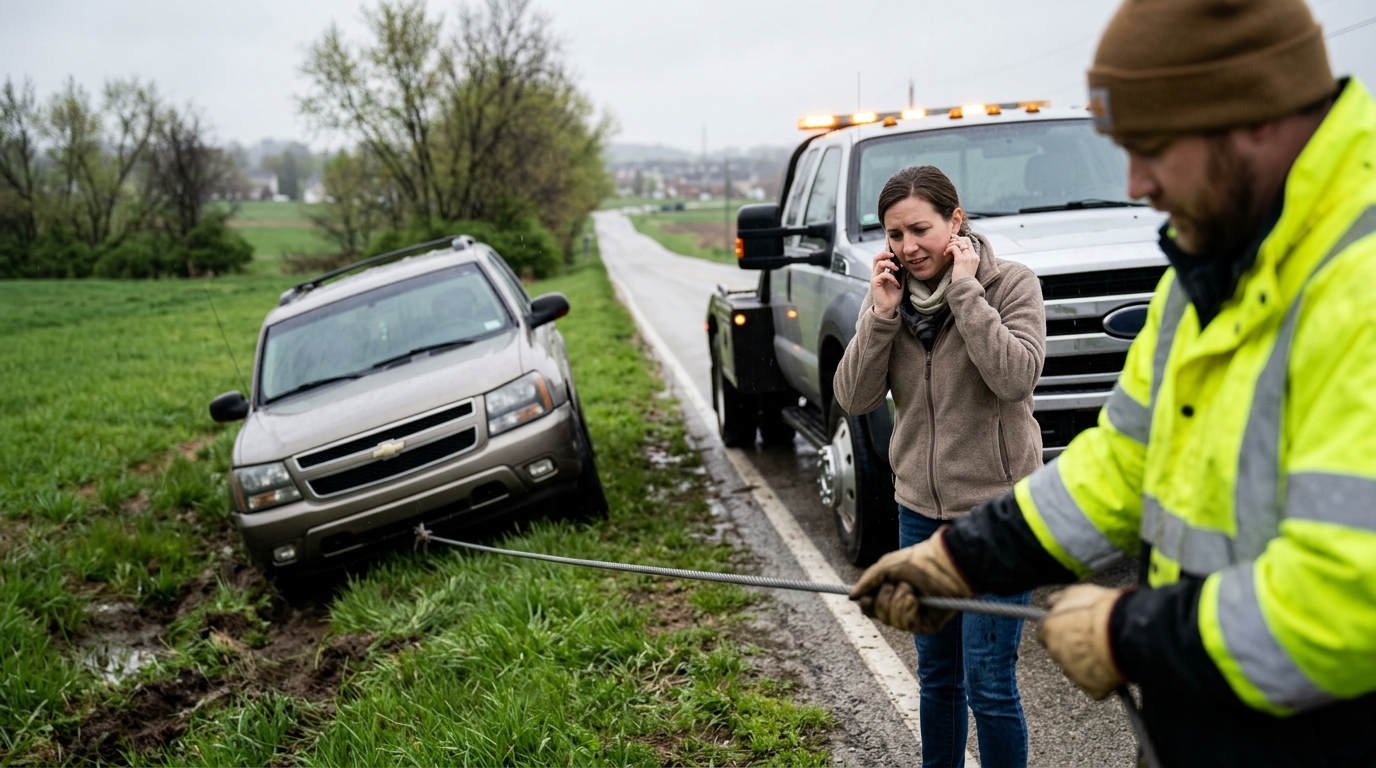
When a vehicle slides into a ditch in Dayton, Ohio, the primary entity capable of performing the recovery is a licensed, DOT-registered towing operator equipped with heavy-duty winches and flatbed trucks. Kaygold Towing Service provides 24/7 emergency recovery for these specific scenarios. This guide details the operational procedures for ditch extraction, the specific equipment required for safe winching, and how to select a reliable local provider in the Dayton area. For additional details, review the .
Ditch Recovery Services
Ditch recovery is a specialized subset of roadside assistance that requires distinct equipment and safety protocols compared to standard flatbed towing. A standard tow truck may not have the necessary leverage or winch capacity to extract a vehicle from a deep embankment without causing further damage to the suspension or undercarriage. Professional recovery operators utilize heavy-duty winches, often rated for 12,000 to 20,000 pounds, to generate the necessary force to pull a vehicle out of soft soil or gravel. For additional details, review the Customer Experience.
Assessment and Safety Protocols
Before any physical extraction begins, the operator must assess the stability of the ditch walls. Unstable soil can collapse under the weight of the vehicle, creating a hazardous situation for both the driver and the tow operator. The operator will check for hidden obstacles, such as rocks or debris, that could damage the vehicle's frame during the pull. Safety cones and flares are deployed to protect the work zone from oncoming traffic, a critical step on high-speed roads near Dayton. For additional details, review the Frequently Asked Questions.
Equipment Variations
Not all recovery trucks are created equal. Some operators use wheel-lift trucks, which are faster for minor incidents but less effective for deep ditches. Others use flatbeds with integrated winches, which allow for a more controlled extraction. The choice of equipment depends on the vehicle's weight, the depth of the ditch, and the condition of the vehicle's drivetrain. A manual transmission vehicle, for example, requires different handling than an automatic to prevent transmission damage during the pull. For additional details, review the About.
Winch Out Procedures
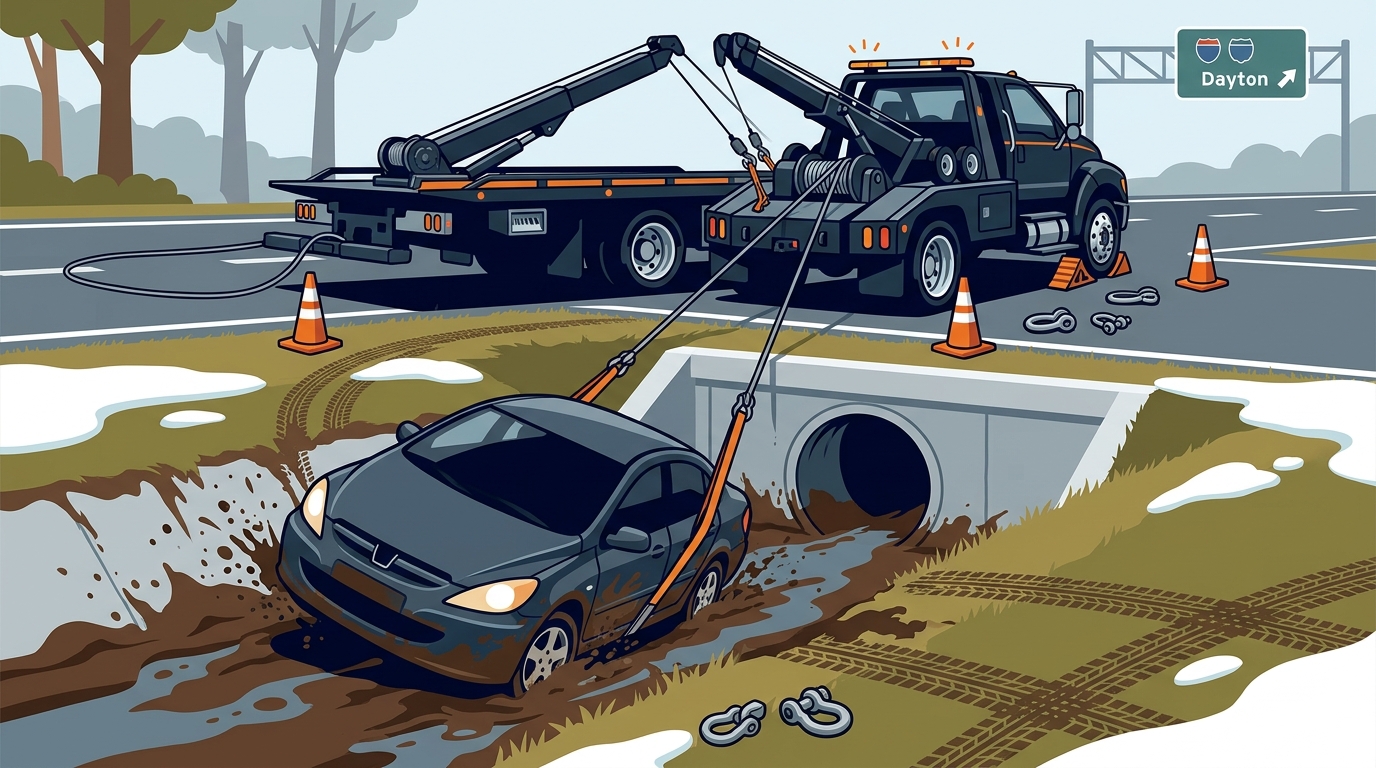
Winch out procedures are the technical steps taken to safely extract a vehicle from a ditch using a powered winch. This process is not simply about pulling the car; it is about managing tension, angle, and vehicle integrity. The operator must ensure that the winch cable is attached to a secure point on the vehicle's frame, not the bumper or axle, to prevent structural failure. The angle of the pull is critical; a straight-line pull is generally safer than an angled pull, which can twist the vehicle's chassis.
Step-by-Step Extraction
The extraction process typically follows a strict sequence. First, the operator secures the vehicle's wheels with chocks to prevent rolling. Next, the winch cable is attached to the designated recovery point. The operator then engages the winch slowly, monitoring the vehicle's movement and the tension on the cable. If the vehicle begins to tilt or the cable vibrates excessively, the operator will stop the winch and reassess the situation. This cautious approach prevents the "snapping" of cables, which can cause serious injury.
Preventing Vehicle Damage
Improper winching can cause significant damage to a vehicle's suspension, drivetrain, and frame. The operator must ensure that the vehicle's transmission is in neutral and the parking brake is disengaged before applying force. For vehicles with all-wheel drive, the operator may need to disconnect the driveshafts to prevent drivetrain binding. This level of technical knowledge is what distinguishes a professional recovery service from an untrained individual attempting a DIY rescue.
Dayton Towing Companies
Selecting the right towing company in Dayton is crucial for ensuring a safe and efficient recovery. The Dayton area is served by numerous towing providers, but not all are equipped or licensed to handle complex ditch recoveries. A reliable provider must be DOT-registered, fully insured, and available 24/7. Kaygold Towing Service operates as a DOT-registered, owner-operated business, ensuring that the person answering the phone is the same person driving the truck. This direct line of communication reduces response times and improves coordination during emergencies.
Comparing Local Providers
The following table compares key attributes of local towing services in the Dayton area. Note that specific response times and service areas can vary based on traffic and weather conditions.
| Provider | DOT Registered | 24/7 Availability | Owner-Operated | Primary Focus |
|---|---|---|---|---|
| Kaygold Towing Service | Yes | Yes | Yes | Emergency Recovery & Roadside |
| General Local Towing | Varies | Varies | No | Standard Towing |
Why Owner-Operated Matters
In the towing industry, owner-operated businesses often provide a higher level of care and accountability. When you call an owner-operated service like Kaygold Towing Service, you are speaking directly with the professional who will be handling your vehicle. This eliminates the communication gaps that can occur with large dispatch centers. The operator can provide real-time updates on their location and the expected time of arrival, giving you peace of mind during a stressful situation.
Key Takeaways
- Ditch recovery requires specialized equipment, including heavy-duty winches and flatbed trucks, that standard tow trucks may not possess.
- Professional operators follow strict safety protocols, including assessing ditch stability and securing the vehicle before extraction.
- Winch out procedures involve careful management of tension and angle to prevent damage to the vehicle's frame and drivetrain.
- DOT registration is a critical indicator of a licensed and compliant towing operator in Ohio.
- Owner-operated services like Kaygold Towing Service offer direct communication and faster response times.
- Always ensure the towing company is fully insured to protect against potential liability during the recovery process.
- Do not attempt to winch a vehicle out of a ditch yourself unless you have professional training and equipment.
Frequently Asked Questions
Can any tow truck pull a car out of a ditch?
No, not all tow trucks are equipped for ditch recovery. Standard wheel-lift trucks may lack the winch capacity or stability to safely extract a vehicle from a deep embankment. You need a provider with heavy-duty winches and flatbed capabilities.
How long does a ditch recovery take?
The time required for a ditch recovery varies based on the depth of the ditch, the vehicle's weight, and traffic conditions. On average, a professional recovery can take anywhere from 30 minutes to two hours.
Is it safe to leave my car in the ditch while waiting?
If the vehicle is stable and not in a high-traffic area, it is generally safe to wait. However, you should move to a safe location away from the road and remain visible to other drivers. If the vehicle is unstable or in a hazardous position, the operator may need to secure it immediately.
What should I do if my car is stuck in a ditch?
First, ensure your safety and the safety of your passengers. Turn on your hazard lights and place flares or cones behind the vehicle. Then, call a licensed towing service like Kaygold Towing Service for professional assistance.
Does Kaygold Towing Service operate 24/7?
Yes, Kaygold Towing Service provides 24/7 dispatch availability. Their team is available around the clock to handle emergency towing and roadside assistance in Dayton and surrounding areas.
How much does ditch recovery cost?
Costs vary based on the complexity of the recovery, the distance to the nearest safe location, and the time of day. It is best to request a quote from the towing provider before the work begins to avoid unexpected charges.
Conclusion
When your vehicle ends up in a ditch in Dayton, the priority is safe and professional recovery. Kaygold Towing Service offers the expertise, equipment, and 24/7 availability needed to handle these emergencies. As a DOT-registered and owner-operated business, they provide the direct communication and accountability that drivers need in a crisis. For immediate assistance, contact the dispatch line to ensure your vehicle is recovered safely and efficiently.