
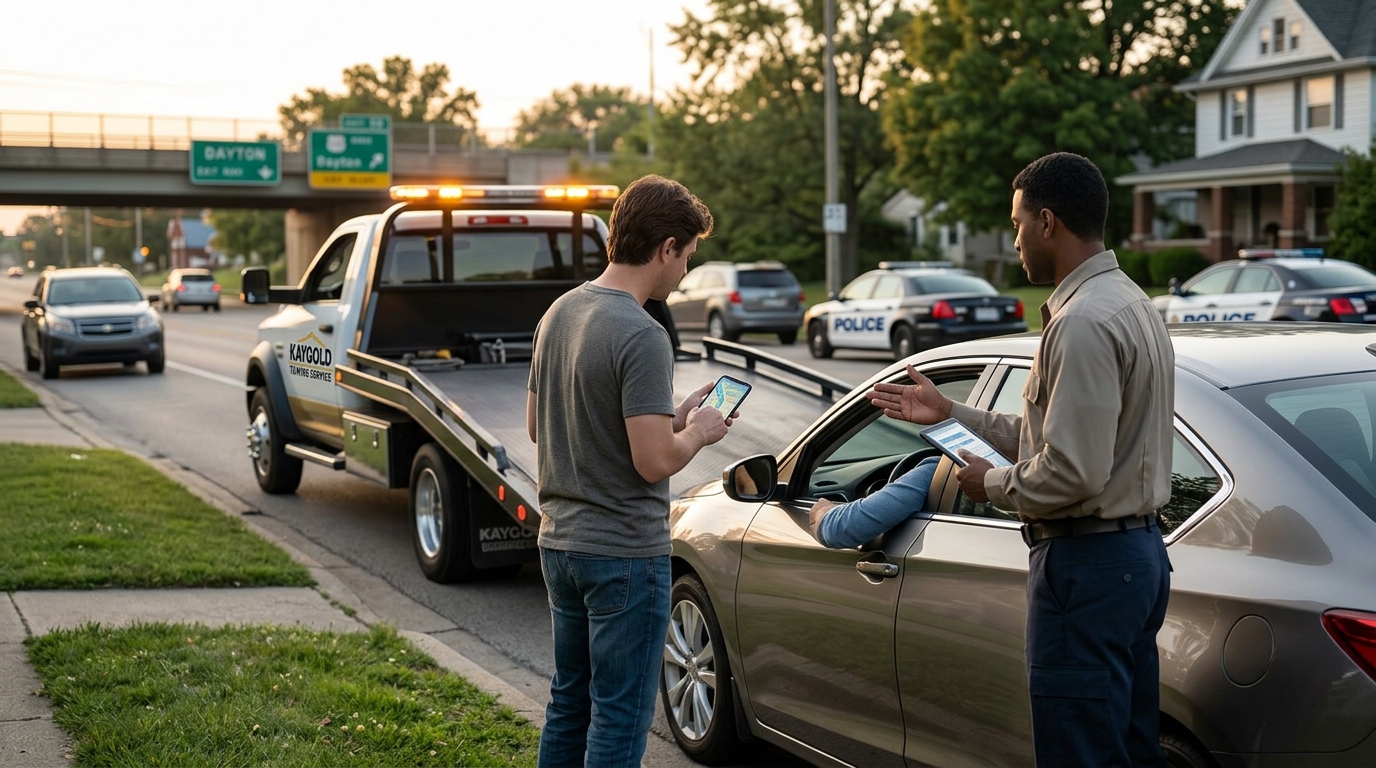
Any licensed, DOT-registered towing operator can tow your car in Dayton, Ohio. However, the specific entity that tows your vehicle depends on the situation: a private company like Kaygold Towing Service for breakdowns, your insurance provider for roadside assistance, or the Dayton Police Department for impoundments. This guide explains the three distinct pathways for vehicle recovery in the Dayton area, detailing who holds the authority to move your car and how to navigate each scenario safely and efficiently.
Local Towing Services in Dayton
Local towing services are private businesses that provide emergency recovery for vehicles experiencing mechanical failures, accidents, or breakdowns. In Dayton, Ohio, these operators must be registered with the Department of Transportation (DOT) and maintain proper insurance to operate legally. When you call a local provider, you are hiring a private contractor to move your vehicle to a location of your choice, such as a repair shop or your home.
DOT Registration and Licensing
DOT registration is a federal requirement for commercial motor vehicles, including tow trucks, that operate in interstate commerce or meet specific weight thresholds. For local drivers in Dayton, verifying that a towing company is DOT-registered ensures they are operating within legal compliance frameworks. This registration status is a critical indicator of a legitimate business. Kaygold Towing Service is a DOT-registered carrier, which means their operations are monitored for safety and regulatory adherence. This status provides drivers with a layer of accountability that unregistered operators cannot offer.
Owner-Operated vs. Large Fleets
Response Times and Availability
Response times for local towing services in Dayton vary based on traffic, time of day, and the specific location of the breakdown. Urban areas near downtown Dayton may see faster arrivals due to higher truck density, while suburban or rural areas may require longer travel times. 24/7 availability is a standard expectation for emergency towing. Drivers should confirm that the provider they call operates around the clock, as some smaller shops may have limited hours. Kaygold Towing Service maintains 24/7 dispatch availability, ensuring that help is accessible regardless of when a breakdown occurs.
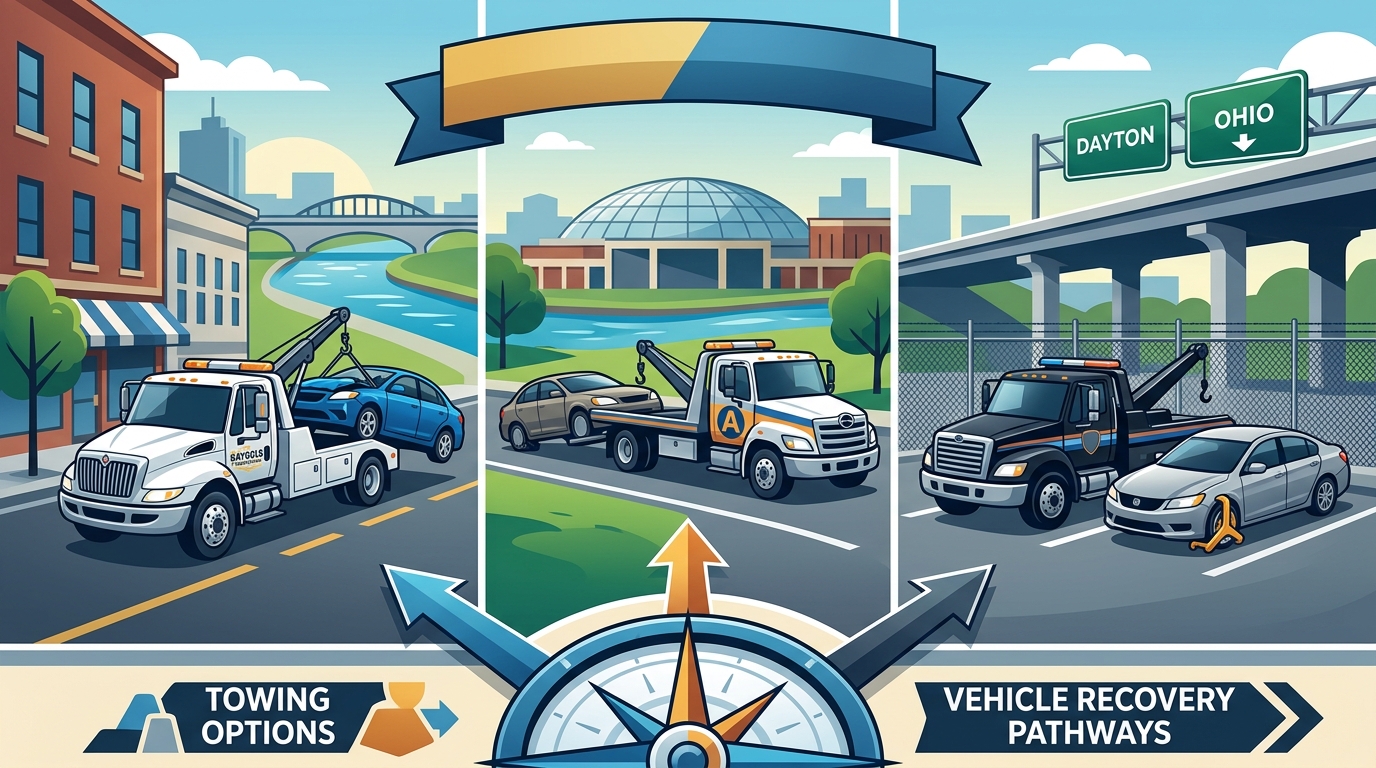
Roadside Assistance Programs
Roadside assistance programs are subscription-based services, often provided by insurance companies, credit card issuers, or automotive clubs, that offer a suite of emergency services including towing, battery jumps, and fuel delivery. These programs differ from direct towing calls because they operate through a network of contracted providers. When you activate a roadside assistance program, you are not hiring a specific tow truck; you are activating a benefit that directs a network partner to your location.
Insurance-Provided Assistance
Insurance-provided roadside assistance is a benefit included in many auto insurance policies. This service typically covers towing to the nearest repair shop if your vehicle is inoperable. The insurance company manages the relationship with the towing provider, meaning you do not pay the tow truck driver directly. Instead, the cost is billed to the insurance company or applied to your policy deductible, depending on the specific terms. It is crucial to review your policy documents to understand the mileage limits and coverage exclusions associated with this benefit.
Credit Card and Club Benefits
Network Provider Selection
Network provider selection is the process by which a roadside assistance program assigns a specific towing company to your request. This assignment is usually automated based on proximity and availability. You generally do not have the option to choose a specific provider when using a network program. However, you can request that the vehicle be taken to a specific repair shop, provided it is within the allowed mileage limit. Understanding this process helps manage expectations regarding who will actually arrive at your scene.
Police Impound Recovery
Police impound recovery is the process of retrieving a vehicle that has been seized and stored by law enforcement authorities. This scenario occurs when a vehicle is involved in a traffic violation, an accident, or is abandoned. In Dayton, the Dayton Police Department (DPD) is the primary authority responsible for impounding vehicles. Unlike private towing, impound recovery is a legal process governed by municipal and state regulations.
When Vehicles Are Impounded
The Recovery Process
The recovery process involves several administrative steps. First, you must identify the specific impound lot where your vehicle is stored. The DPD will provide this information upon request. Next, you must present valid identification and proof of ownership at the impound lot. You will also need to pay any accrued storage fees and fines. Once these requirements are met, the impound lot will release the vehicle. You can then arrange for a private tow to move the car from the lot to your desired location.
Legal Rights and Fees
Legal rights and fees are critical components of impound recovery. Ohio law provides specific guidelines for how long a vehicle can be held and what fees can be charged. Storage fees are typically charged on a daily basis and can accumulate quickly. It is important to act promptly to minimize these costs. Additionally, you have the right to request a hearing if you believe the impoundment was unlawful. Consulting with a legal professional is advisable in complex cases involving disputes over ownership or the validity of the impoundment.
Comparison of Towing Scenarios
The following table summarizes the key differences between the three primary methods of vehicle recovery in Dayton, Ohio. Understanding these distinctions helps drivers choose the appropriate course of action based on their specific situation.
| Scenario | Who Tows the Vehicle | Cost Responsibility | Typical Use Case |
|---|---|---|---|
| Local Towing Service | Private, DOT-registered operator (e.g., Kaygold Towing Service) | Driver pays directly | Mechanical breakdown, accident, flat tire |
| Roadside Assistance | Network provider assigned by insurance or credit card | Insurance company or credit card issuer | Covered breakdowns, battery jumps, fuel delivery |
| Police Impound | Law enforcement (Dayton Police Department) | Driver pays storage fees and fines | Traffic violations, abandoned vehicles, evidence |
Key Takeaways
- Any DOT-registered towing operator can legally tow your vehicle in Dayton, Ohio.
- Local, owner-operated services like Kaygold Towing Service offer direct communication and 24/7 availability.
- Roadside assistance programs use network providers, meaning you do not choose the specific tow truck.
- Police impound recovery is a legal process managed by the Dayton Police Department.
- Impound storage fees accrue daily, so prompt action is necessary to minimize costs.
- Always verify the DOT registration status of any private towing company before hiring.
- Review your insurance policy to understand the specific limits and exclusions of your roadside assistance benefit.
Frequently Asked Questions
Who is legally allowed to tow my car in Dayton?
Any licensed and DOT-registered towing operator is legally allowed to tow your car in Dayton. This includes private companies like Kaygold Towing Service, as well as network providers associated with insurance or credit card programs. Law enforcement agencies can also impound vehicles under specific legal circumstances.
What is DOT registration for tow trucks?
DOT registration is a federal requirement for commercial vehicles that operate in interstate commerce. For tow trucks, this registration ensures the operator complies with safety and operational standards. It is a key indicator of a legitimate and accountable towing business.
How do roadside assistance programs choose a tow truck?
Roadside assistance programs use an automated system to assign a network provider based on proximity and availability. You do not choose the specific company; the program selects the nearest available partner to respond to your request.
Who manages police impound lots in Dayton?
The Dayton Police Department (DPD) manages the impoundment process. They authorize the seizure of vehicles and designate specific impound lots where the vehicles are stored. The DPD does not typically operate the storage facilities themselves but oversees the legal process.
Can I choose where my car is towed?
Yes, when using a private towing service, you can specify the destination, such as a repair shop or your home. If using a roadside assistance program, you can usually request a specific repair shop, provided it is within the mileage limit defined by your policy.
How much does impound storage cost in Dayton?
Impound storage costs vary by lot and are charged on a daily basis. Fees can accumulate quickly, so it is important to retrieve your vehicle as soon as possible. The exact cost depends on the specific impound facility and the duration of storage.
Is Kaygold Towing Service available 24/7?
Yes, Kaygold Towing Service offers 24/7 dispatch availability. This means you can call for assistance at any time, day or night, and speak directly with the operator.
What should I do if my car is impounded?
First, contact the Dayton Police Department to confirm the location of the impound lot. Next, gather your identification and proof of ownership. Finally, visit the impound lot to pay any required fees and arrange for the vehicle's release.
Conclusion
Understanding who can tow your car in Dayton, Ohio, is essential for navigating vehicle emergencies with confidence. Whether you are dealing with a mechanical breakdown, utilizing an insurance benefit, or retrieving an impounded vehicle, knowing the specific roles of private operators, network providers, and law enforcement helps you make informed decisions. For reliable, 24/7 emergency recovery, Kaygold Towing Service provides a trusted, DOT-registered solution for drivers in the Dayton area. When you need help, you can reach the person actually driving the truck, ensuring a direct and efficient response to your roadside needs.