
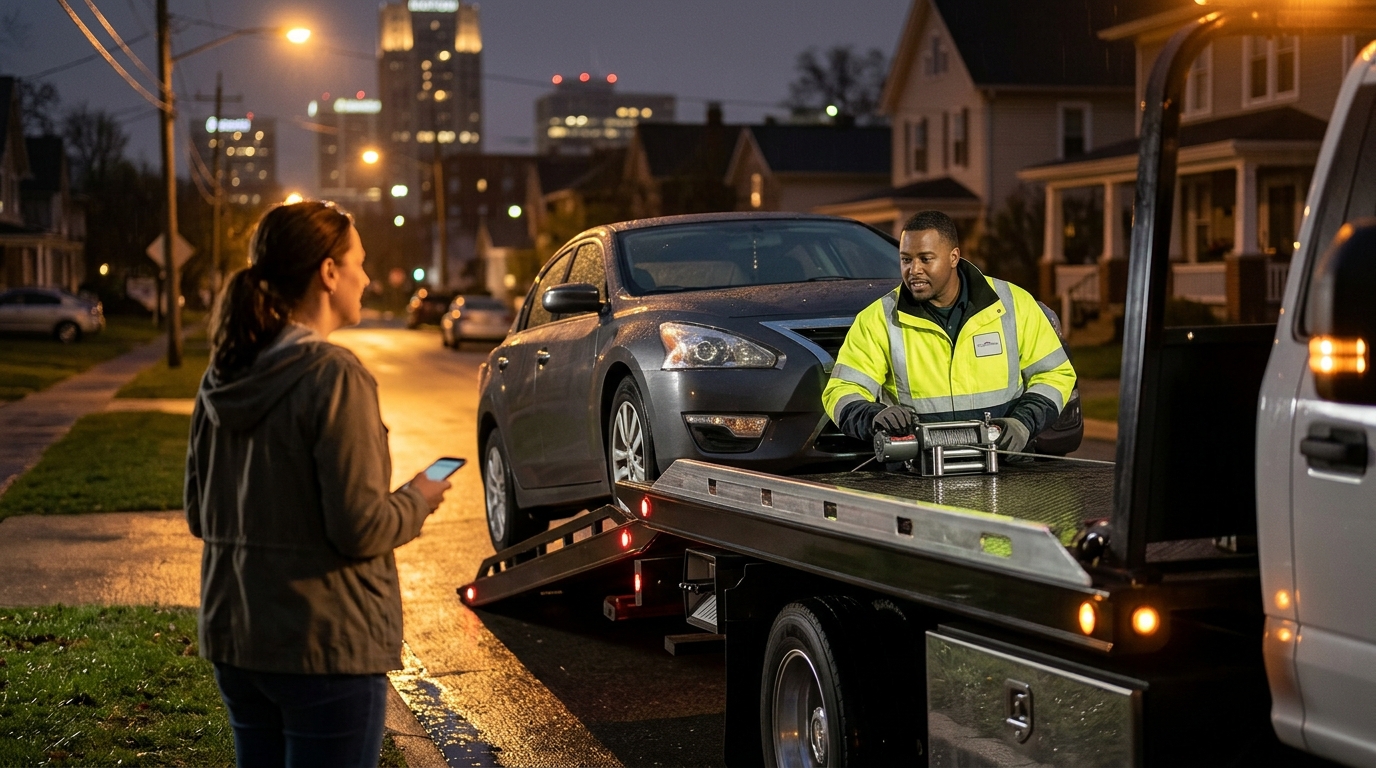
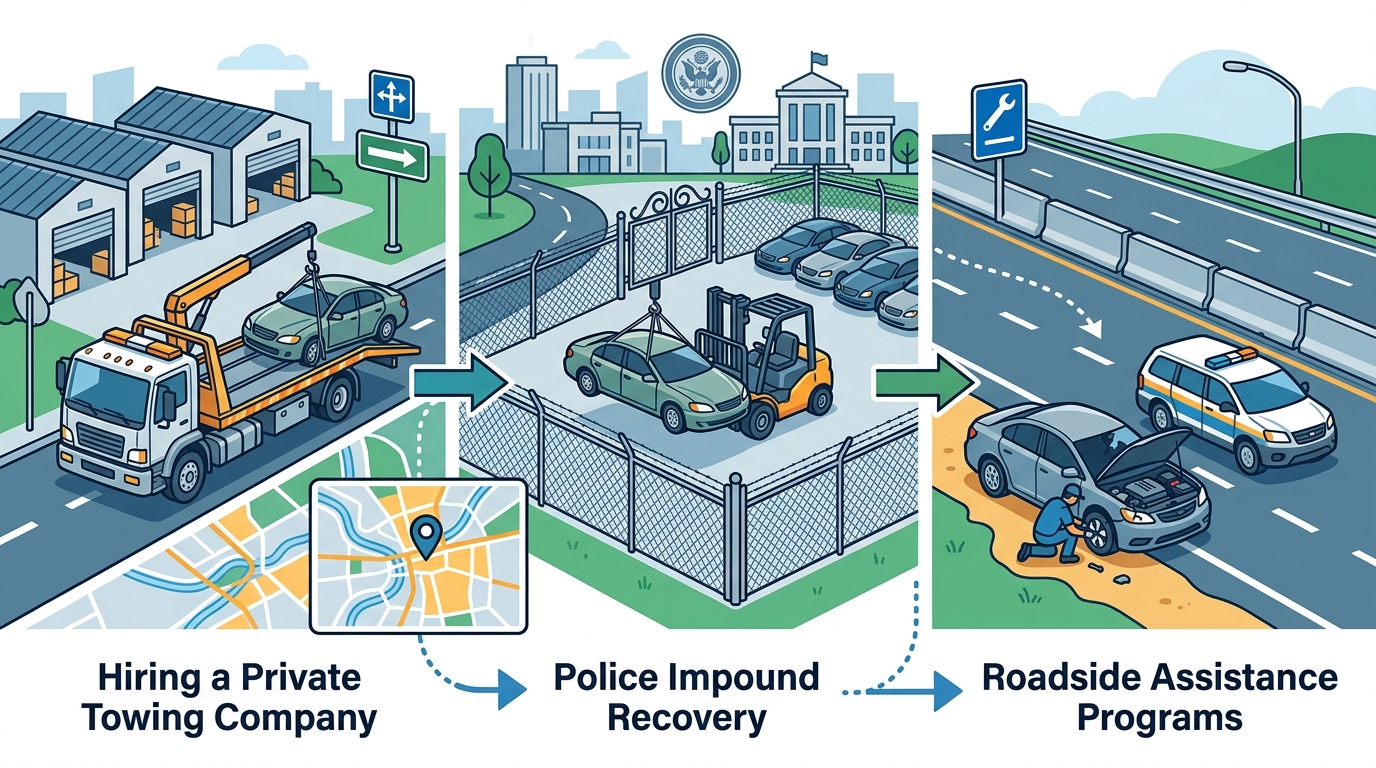
Any licensed, DOT-registered towing operator in Dayton, Ohio, can legally tow your vehicle, provided they follow state regulations and local ordinances. Kaygold Towing Service is a local, owner-operated provider that handles emergency recovery and roadside support 24/7. This guide covers the three main pathways for getting your car moved: hiring a private towing company, navigating police impound recovery, and utilizing roadside assistance programs.
Dayton Towing Companies
Choosing the right private operator is the first step in vehicle recovery. In Dayton, drivers have access to a mix of large regional fleets and smaller, independent operators. The primary distinction lies in the type of equipment used and the scope of services offered.
Types of Towing Equipment
Not all trucks are created equal. The method of towing depends on your vehicle's condition and drivetrain.
- Flatbed Towing: The vehicle is driven or winched onto a flat platform. This is the safest option for all-wheel drive vehicles, low-clearance sports cars, or vehicles with severe mechanical damage.
Regulatory Requirements for Operators
Ohio law requires towing companies to be licensed and registered. A DOT-registered carrier is a business that has registered with the U.S. Department of Transportation and holds a valid USDOT number. This registration ensures the operator meets federal safety and insurance standards. When selecting a provider, verify their registration status to ensure they are a legitimate business entity.
Kaygold Towing Service operates as a DOT-registered carrier in Dayton. As an owner-operated business, the person answering the phone is often the person driving the truck. This structure typically results in faster response times and more direct communication during the recovery process. You can view their specific service capabilities on the Kaygold Towing Service homepage.
Police Impound Recovery
Impound towing occurs when a law enforcement officer orders a vehicle to be removed from a scene. This is not a choice made by the driver; it is a legal directive. Understanding the process is critical for retrieving your vehicle quickly.
When Police Order a Tow
Officers typically order a tow in three scenarios:
- Accidents: If a vehicle is involved in a crash and blocks traffic or is unsafe to drive, it must be removed.
- Traffic Violations: Vehicles parked in illegal spots, such as fire lanes or no-parking zones, may be towed by municipal enforcement.
- Abandoned Vehicles: Cars left on private property or public rights-of-way for an extended period may be impounded.
The Impound Process in Dayton
When a police officer orders a tow, they usually call a specific tow company or a dispatch center that assigns an available truck. The vehicle is taken to a designated impound lot. In Dayton, these lots are often operated by private companies under contract with the city or county.
Once the vehicle is at the lot, the driver must provide proof of ownership, a valid driver's license, and proof of insurance to retrieve it. There are usually fees associated with the initial tow and daily storage. These fees are set by the impound facility and are separate from the cost of a private tow.
Choosing a Private Tow vs. Police Tow
If your car is in a minor accident and is drivable, you may be able to call a private tow company to move it to a repair shop. However, if the officer determines the vehicle is a hazard, they will order an impound tow. You cannot override this order. If you are in this situation, Kaygold Towing Service can assist with the recovery process once the vehicle is released from the impound lot, provided it is within their service area.
Roadside Assistance Options
Roadside assistance is a service that provides help for minor issues that do not require a full tow. It is often included in auto insurance policies or purchased as a standalone membership.
Common Roadside Services
Most roadside assistance programs cover the following:
- Jump Starts: For dead batteries.
- Tire Changes: Swapping a flat tire with a spare.
- Fuel Delivery: A small amount of gas to get you to the nearest station.
- Lockout Service: Unlocking a car if you have locked your keys inside.
When to Call Roadside vs. Towing
The decision to call roadside assistance or a tow truck depends on the severity of the issue. If your car is running but you have a flat tire, roadside assistance is the faster and cheaper option. If your engine has seized or your transmission has failed, you need a tow truck. Roadside assistance is a support service that addresses minor mechanical failures, while towing is a recovery service for vehicles that cannot be driven.
Kaygold Towing Service offers both towing and roadside assistance. This means you can call one number for a jump start or a full flatbed tow. Their dispatch is open 24/7/365, ensuring help is available regardless of the time of day. For more details on their specific roadside offerings, visit the Kaygold Towing Service website.
Comparison of Towing Options
| Option | Best For | Cost Structure | Response Time |
|---|---|---|---|
| Private Towing (e.g., Kaygold) | Breakdowns, minor accidents, non-emergency moves | Hourly rate or flat fee | Varies by availability |
| Police Impound | Major accidents, illegal parking, abandoned cars | Tow fee + daily storage | Immediate (ordered by officer) |
| Roadside Assistance | Dead batteries, flats, lockouts, fuel | Membership fee or per-incident | Typically 30-60 minutes |
Key Takeaways
- Any licensed, DOT-registered towing company in Dayton can legally tow your vehicle.
- Police impound tows are mandatory and cannot be overridden by the driver.
- Flatbed towing is the safest option for all-wheel drive and low-clearance vehicles.
- Roadside assistance is ideal for minor issues like dead batteries and flat tires.
- Owner-operated tow companies often provide faster response times and direct communication.
- Always verify a towing company's DOT registration before hiring them.
- Impound lot fees are separate from the initial tow cost and can accumulate daily.
- Having a 24/7 dispatch line is crucial for late-night breakdowns.
Frequently Asked Questions
Who can legally tow my car in Dayton?
Any towing company that is licensed by the state of Ohio and registered with the U.S. Department of Transportation (DOT) can legally tow your car. This includes both large regional fleets and smaller, independent operators like Kaygold Towing Service.
What is the difference between a tow and roadside assistance?
A tow involves moving your entire vehicle to a different location, such as a repair shop or impound lot. Roadside assistance involves fixing a minor issue on the spot, such as jump-starting a battery or changing a tire, so you can continue driving.
Can I choose which tow company comes to my accident?
In most minor accidents, you can choose your own tow company. However, if a police officer determines your vehicle is a hazard or is blocking traffic, they will order a specific tow company to remove it. You cannot override this order.
How much does it cost to get a car out of an impound lot in Dayton?
Costs vary by facility. You will typically pay an initial tow fee plus a daily storage fee. The exact amounts are set by the impound lot operator and are separate from any private tow fees.
Is Kaygold Towing Service available 24/7?
Yes, Kaygold Towing Service operates on a 24/7/365 basis. Their dispatch line is open around the clock, ensuring help is available for emergencies at any time.
What should I do if my car breaks down on the highway?
First, ensure your safety by moving to the shoulder if possible and turning on your hazard lights. Then, call a tow service. If you have roadside assistance, call them first for minor issues. If your car is not drivable, call a tow truck like Kaygold Towing Service for recovery.
Do I need to be present when my car is towed?
You do not need to be present for the tow itself. However, you must be present to retrieve the vehicle from an impound lot. You will need to provide proof of ownership, a valid driver's license, and proof of insurance.
What is a DOT-registered carrier?
A DOT-registered carrier is a business that has registered with the U.S. Department of Transportation and holds a valid USDOT number. This registration ensures the operator meets federal safety and insurance standards.
Conclusion
Knowing who can tow your car in Dayton is essential for every driver. Whether you face a minor breakdown or a major accident, understanding the options available to you ensures you can get back on the road safely and efficiently. Kaygold Towing Service provides a reliable, 24/7 solution for drivers in Dayton and surrounding areas. As a DOT-registered, owner-operated business, they offer the direct communication and quick response times that matter most in an emergency. For immediate assistance, contact Kaygold Towing Service today.