

Does Insurance Cover Towing Costs? The 2026 Guide for Dayton Drivers
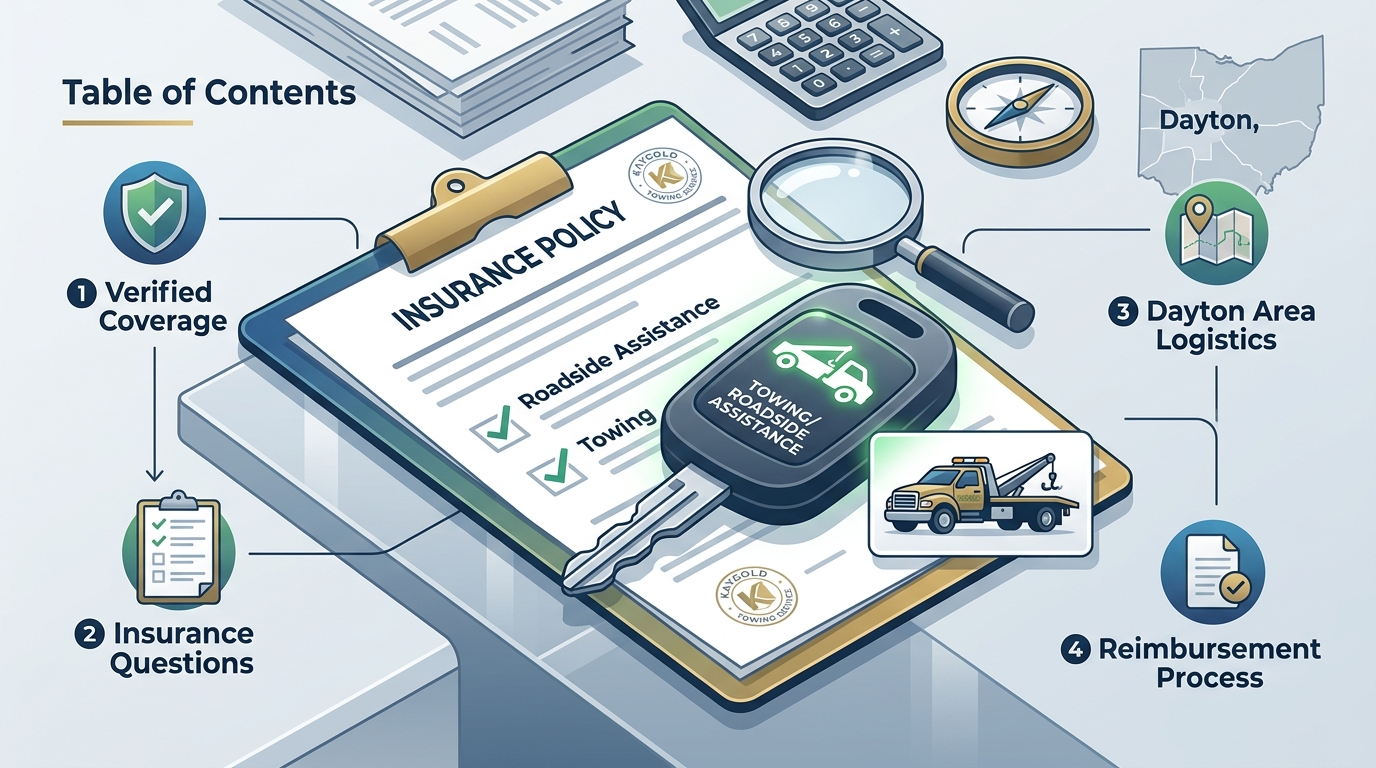
Most standard auto insurance policies do not automatically cover towing costs unless you have specific add-ons like roadside assistance or comprehensive coverage for certain events. Kaygold Towing Service helps Dayton, Ohio drivers navigate these policies by providing transparent, DOT-registered towing that aligns with most insurance reimbursement requirements. This guide covers how to verify your coverage, what to ask your insurer, and how to handle the logistics of a tow in the Dayton area.
How to Choose a Towing Provider
Choosing a towing company is not just about finding the nearest truck. It is about finding a partner who understands insurance protocols and local regulations. A good provider separates itself through transparency and registration. Kaygold Towing Service is a DOT-registered, owner-operated business in Dayton, Ohio. This means when you call, you speak to the person driving the truck. This direct line of communication is critical for insurance claims because it ensures accurate documentation of the incident.
Registration and Insurance Status
Always verify that a towing company is registered with the Department of Transportation. In Ohio, commercial towing operations must maintain specific licenses. A registered carrier is more likely to provide the detailed invoices and incident reports that insurance adjusters require for reimbursement. Unregistered operators may not provide the documentation needed to process your claim.
Availability and Response Time
Availability is a key differentiator. Many towing services operate on limited hours. Kaygold Towing Service offers 24/7 dispatch availability. If your car breaks down at 3 AM, you need a provider who is awake and ready to roll. Check if the provider you are considering has a dedicated dispatch line that is monitored around the clock.
What to Ask Your Insurance Company
Before you call a tow truck, you need to know exactly what your policy says. Insurance policies vary significantly between providers. You must ask specific questions to avoid out-of-pocket surprises. Do not assume that because you have liability coverage, you have towing coverage. These are separate components of your policy.
Key Questions for Your Agent
- Does my policy include roadside assistance or towing as a standard benefit?
- Is there a mileage limit for covered tows (e.g., 50 miles or 100 miles)?
- Do I need to use a preferred vendor list, or can I choose any licensed tow truck?
- What is the maximum reimbursement amount per incident?
- Do I need to pay upfront and submit a claim later, or can the tow truck bill the insurance company directly?
Write down the answers. If your agent says "it depends," ask for the specific policy clause number. This documentation will help you if there is a dispute later.
How to Verify Coverage and Credentials
Verification is the step most drivers skip, leading to denied claims. You must verify two things: your insurance coverage and the towing company's credentials. For insurance, log into your provider's online portal or call your agent to confirm active coverage. For the towing company, check their registration status.
Verifying Towing Credentials
In Ohio, you can check the status of commercial motor vehicle operators through the Federal Motor Carrier Safety Administration (FMCSA) database. Look for the company's USDOT number. Kaygold Towing Service is a DOT-registered carrier. This registration indicates that the business meets federal safety and operational standards. It is a mark of legitimacy that insurance companies recognize.
Verifying Insurance Coverage
Ask your insurance provider for a written confirmation of your towing benefits. Some policies have exclusions for mechanical breakdowns that are not covered under comprehensive or collision. If your car has a dead battery, that is often a roadside assistance item, not a comprehensive claim. Knowing the distinction is vital for verification.
How the Towing and Reimbursement Process Works
Understanding the workflow prevents panic and ensures smooth processing. The process generally follows a specific sequence. First, you assess the situation. Second, you contact your insurance provider to notify them of the incident. Third, you call the towing service. Fourth, the tow occurs. Fifth, you collect documentation. Sixth, you submit the claim.
Step-by-Step Workflow
- Assess Safety: Move your vehicle to a safe location if possible. Turn on hazard lights.
- Notify Insurance: Call your insurance company's claims line. Get a claim number.
- Call Towing: Contact a licensed towing service like Kaygold Towing Service. Provide your claim number if requested.
- Document the Scene: Take photos of the vehicle, the location, and any damage.
- Receive Invoice: Ensure the tow truck provides a detailed invoice with the date, time, mileage, and services rendered.
- Submit Claim: Upload the invoice and photos to your insurance portal.
This sequence ensures that all parties have the necessary information to process the reimbursement quickly.
What Towing Costs and What Drives the Price
Towing costs are not fixed. They vary based on several factors. Understanding these factors helps you budget and understand your reimbursement. The base fee is just the starting point. Additional charges can quickly add up.
Factors Influencing Price
| Factor | Impact on Cost | Insurance Relevance |
|---|---|---|
| Distance | Per-mile rate after base fee | Often capped by policy limits |
| Vehicle Type | Flatbed vs. Wheel Lift | May require specific equipment approval |
| Time of Day | After-hours surcharges | Usually covered if within policy |
| Location | Highway vs. Residential | May affect response time and fees |
For example, a standard wheel lift tow for a sedan is generally less expensive than a flatbed tow for an SUV. If your vehicle is on a highway, the tow truck may need to use a flatbed for safety, which can increase the cost. Always ask for an estimate before the truck is dispatched.
Common Mistakes and How to Avoid Them
Drivers often make errors that lead to denied claims or higher out-of-pocket costs. Avoiding these mistakes is simple if you know what to look for. The most common error is failing to get a claim number before the tow.
Top Mistakes to Avoid
- Not Calling Insurance First: Some policies require you to notify them before the tow to be eligible for reimbursement.
- Choosing an Unlicensed Provider: Using an unregistered tow truck may result in an invoice that your insurance company rejects.
- Losing the Invoice: Keep a digital and physical copy of the detailed invoice. Without it, you cannot prove the cost.
- Ignoring Policy Limits: If the tow exceeds your policy limit, you are responsible for the difference. Check your limit before authorizing a long-distance tow.
By following these guidelines, you protect your wallet and ensure a smooth claim process.
Towing vs. Roadside Assistance Alternatives
Not every breakdown requires a full tow. Sometimes, a roadside assistance service is sufficient and cheaper. Understanding the difference helps you choose the right service. Roadside assistance typically includes battery jumps, tire changes, and fuel delivery. Towing is for when the vehicle cannot be driven.
When to Use Each Service
If your battery is dead, call roadside assistance. If your transmission is broken, call a tow truck. Kaygold Towing Service handles both emergency towing and roadside assistance. This flexibility means you can start with a diagnostic check. If the issue is minor, they can resolve it on the spot. If it is major, they can tow the vehicle to a repair shop. This approach saves money and time.
Towing for Specific Situations
Different situations have different insurance implications. A breakdown on a highway is different from a breakdown in a parking lot. An accident is different from a mechanical failure. Each scenario triggers different policy clauses.
Accident vs. Mechanical Failure
If you are in an accident, your collision coverage or the at-fault driver's liability insurance may cover the tow. If you have a mechanical failure, your comprehensive coverage or roadside assistance add-on may cover it. If you have neither, you pay out of pocket. Always clarify the cause of the breakdown to determine which coverage applies.
Rules and Consumer Protections
Ohio has specific regulations governing towing and impoundment. These rules protect consumers from unfair practices. Understanding your rights helps you navigate disputes. The Ohio Revised Code outlines the requirements for towing operators, including licensing and fee disclosure.
Your Rights as a Consumer
You have the right to a clear estimate before the tow begins. You have the right to a detailed invoice after the tow. You have the right to dispute fees if they are not clearly explained. If a towing company refuses to provide a detailed invoice, you can report them to the Ohio Department of Transportation. Kaygold Towing Service adheres to these consumer protection standards, ensuring transparency in all transactions.
Local Specifics for Dayton, Ohio
Dayton, Ohio has unique characteristics that affect towing. The city has a mix of residential, commercial, and highway areas. Response times can vary based on traffic and location. Knowing the local landscape helps you set realistic expectations.
Dayton Service Area
Timing and Response Expectations
Timing is critical in towing. The sooner you call, the sooner you are back on the road. Response times depend on the provider's availability and your location. In urban areas like Dayton, response times are generally faster than in rural areas. However, traffic can delay arrival.
Optimizing Response Time
Call as soon as you are safe. Provide your exact location, including cross streets or mile markers. If you are on a highway, provide the direction of travel. This information helps the tow truck driver navigate to you quickly. Kaygold Towing Service's 24/7 dispatch ensures that you can call at any time, and a driver is on the way. This round-the-clock availability minimizes downtime for your vehicle.
Long-Term Outcomes and Financial Impact
Over time, managing towing costs effectively can save you money. Building a relationship with a reliable towing provider can lead to better service and potentially better rates. If you have frequent breakdowns, it may be worth reviewing your vehicle's maintenance schedule. Preventive maintenance reduces the need for tows.
Financial Planning
Consider adding roadside assistance to your auto insurance policy if you do not have it. This add-on is often inexpensive and can save you hundreds of dollars in emergency situations. Alternatively, consider a membership with a national roadside assistance provider. Compare the costs and benefits to determine what is best for your driving habits. Kaygold Towing Service provides the local expertise to complement your insurance coverage, ensuring you are always protected.
Key Takeaways
- Standard auto insurance does not always cover towing; check for roadside assistance add-ons.
- Always verify that a towing company is DOT-registered and licensed in Ohio.
- Call your insurance company before the tow to get a claim number and confirm coverage.
- Keep a detailed invoice from the towing company for reimbursement purposes.
- Understand the difference between roadside assistance and full towing services.
- Use a local provider like Kaygold Towing Service for faster response times in Dayton.
- Review your policy limits to avoid out-of-pocket costs for long-distance tows.
Frequently Asked Questions
Does comprehensive insurance cover towing?
Comprehensive insurance may cover towing if the vehicle is damaged by a covered event, such as theft or vandalism. It does not typically cover mechanical breakdowns. Check your specific policy for details.
How much does insurance usually pay for a tow?
Can I choose any tow truck if I have insurance?
It depends on your policy. Some policies require you to use a preferred vendor list. Others allow you to choose any licensed provider. Ask your insurance agent for clarification.
What if my car is on a highway?
If your car is on a highway, a flatbed tow is often required for safety. This may cost more than a standard wheel lift tow. Ensure your insurance covers the specific type of tow needed.
How long does it take to get reimbursed?
Reimbursement times vary by insurance company. It can take anywhere from a few days to a few weeks. Submit your claim with all required documentation to speed up the process.
Is Kaygold Towing Service DOT registered?
Yes, Kaygold Towing Service is a DOT-registered, owner-operated business in Dayton, Ohio. This registration ensures compliance with federal safety and operational standards.