
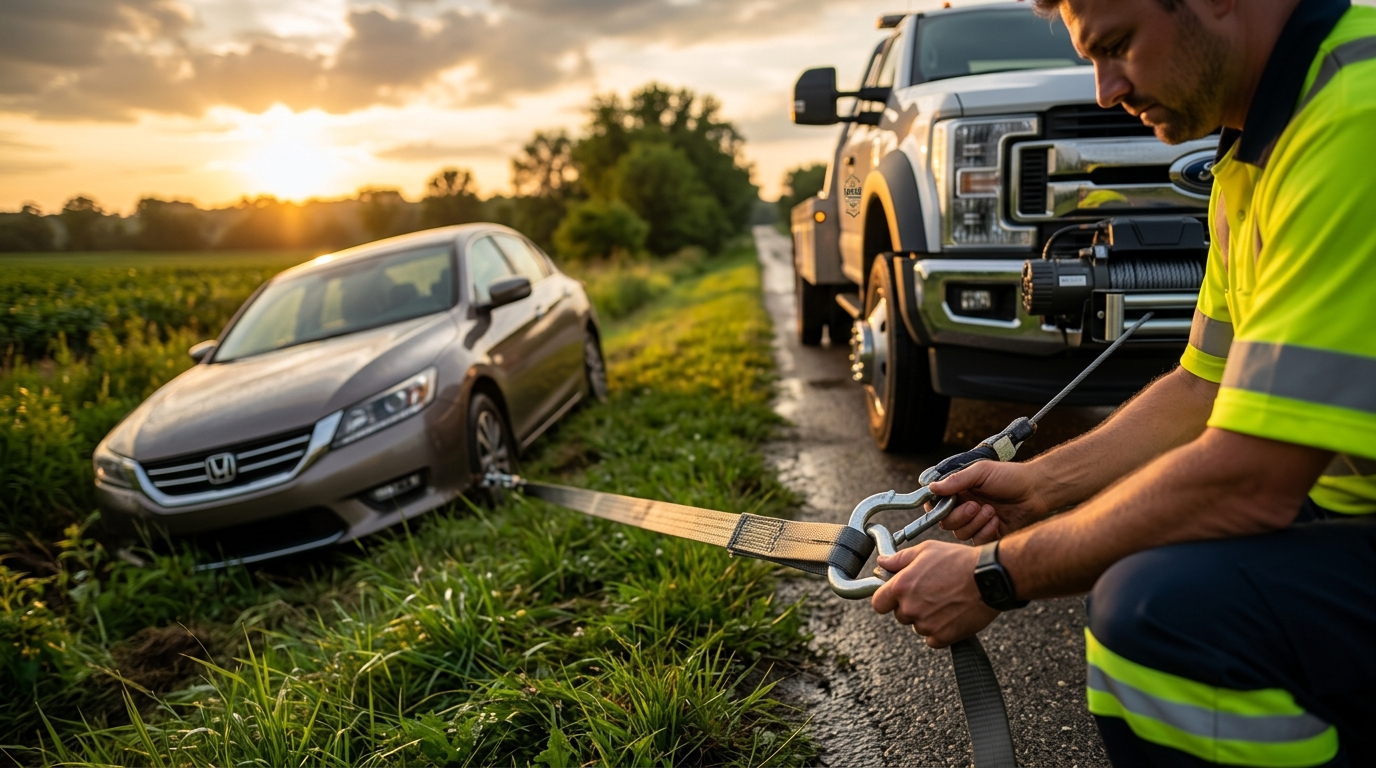
When a vehicle slides into a ditch in Dayton, Ohio, the immediate question is who has the equipment and authority to extract it safely. Kaygold Towing Service is a DOT-registered, owner-operated towing company in Dayton that provides 24/7 emergency recovery and roadside assistance. This guide explains the specific recovery methods used for ditched vehicles, the operational procedures for winching, and how to select a reliable local provider for immediate help. For additional details, review the .
Ditch Recovery Services
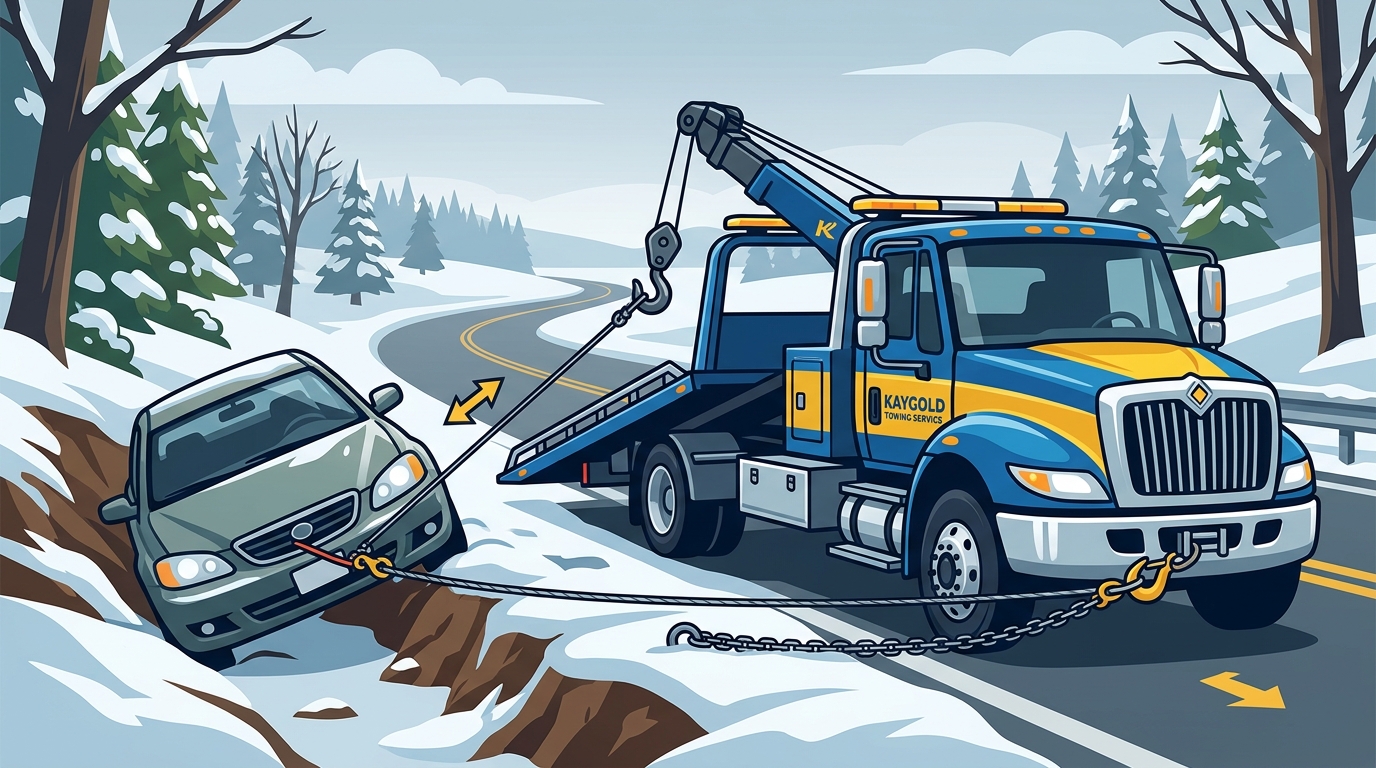
Ditch recovery is a specialized branch of roadside assistance focused on extracting vehicles from off-road terrain, such as ditches, embankments, or soft ground. Unlike standard flatbed towing, which moves a vehicle that is already on the road, ditch recovery requires specific equipment to lift and stabilize a car that is tilted or stuck in mud. The primary goal is to restore the vehicle to a drivable state without causing further damage to the suspension, undercarriage, or tires. For additional details, review the Customer Experience.
Equipment Used for Ditch Extraction
Professional operators use a combination of heavy-duty winches, wheel lifts, and flatbed trucks to handle these situations. A standard wheel lift may not be sufficient if the vehicle is deeply embedded or tilted at a severe angle. In such cases, a flatbed truck with a hydraulic lift is often required to raise the vehicle vertically. This method ensures that the weight of the car is supported evenly, preventing stress on the axle and frame. Operators must assess the depth of the ditch and the condition of the ground before selecting the appropriate tool. For additional details, review the Frequently Asked Questions.
Assessment and Safety Protocols
When to Call a Professional
Drivers should call a professional towing service if the vehicle is tilted more than 15 degrees, if the tires are buried in mud, or if the vehicle is on a public right-of-way. Attempting to self-recover a vehicle in these conditions can lead to severe damage or personal injury. Kaygold Towing Service offers 24/7 dispatch for these types of emergencies, ensuring that a qualified operator is on the way regardless of the time of day or weather conditions.
Winch Out Procedures
Winch out procedures are the technical steps used to pull a vehicle out of a stuck position using a powered winch. This process requires precision to avoid damaging the vehicle's frame or the winch cable. The operator must anchor the winch securely, attach the cable to a strong point on the vehicle, and apply tension gradually. Understanding these procedures helps drivers communicate effectively with the operator and understand what is happening during the recovery. For additional details, review the About.
Anchor Points and Attachment
The first step in a winch out is selecting the correct anchor point on the vehicle. Most modern vehicles have designated tow hooks or recovery points designed to handle the stress of winching. The operator must avoid attaching the cable to the bumper, grille, or suspension arms, as these parts are not rated for heavy loads. If the vehicle does not have a dedicated tow hook, the operator may use a specialized recovery strap or a frame-mounted attachment. The cable must be connected to the winch drum with a secure hook, and the operator must ensure that the cable is not kinked or frayed.
Tension Control and Pulling
Once the cable is attached, the operator begins to apply tension. The winch is operated slowly to prevent the cable from snapping under sudden load. The operator will monitor the vehicle's movement and adjust the winch speed as needed. If the vehicle is stuck in mud, the operator may need to use a