
Does Insurance Cover Towing Costs? A Complete Guide for Dayton Drivers
Insurance Coverage Types
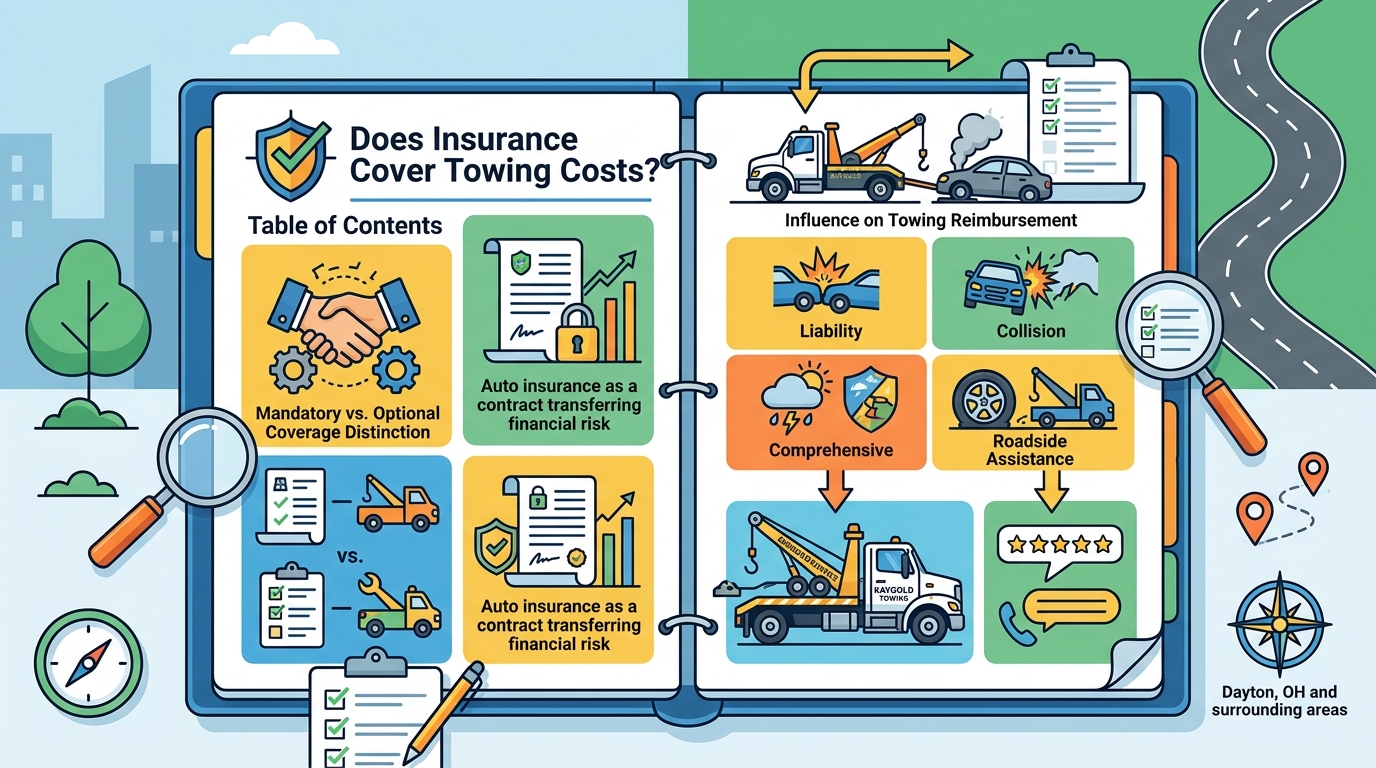
Understanding the distinction between mandatory and optional coverage is the first step in determining if your policy pays for a tow. Auto insurance is a contract that transfers financial risk from the driver to the insurer, but it is not a blanket guarantee for all vehicle-related expenses. The primary categories that influence towing reimbursement are liability, collision, comprehensive, and roadside assistance. For additional details, review the Customer Experience.
Liability Coverage
Liability insurance is mandatory in Ohio and covers damage you cause to others. It does not cover damage to your own vehicle. If your car is totaled in an accident where you are at fault, liability pays for the other party's damages, but it will not pay for towing your wrecked car to a repair shop. You must have physical damage coverage for that.
Collision Coverage
Comprehensive Coverage
Comprehensive vs. Collision Coverage
| Coverage Type | Covers Towing When... | Typical Deductible | Common Exclusions |
|---|---|---|---|
| Liability Only | Never covers your own vehicle | N/A | All physical damage to your car |
It is critical to note that neither collision nor comprehensive coverage pays for towing due to mechanical failure. If your engine seizes, your transmission fails, or your battery dies, these coverages will not apply. You need a separate roadside assistance plan for those scenarios.
Roadside Assistance Add-Ons
Roadside assistance is a specialized service that covers minor breakdowns and emergencies that do not involve a crash. Roadside assistance is a service plan that provides help for issues like dead batteries, flat tires, lockouts, and fuel delivery. This is the most common way drivers get towing covered for non-accident situations.
What Roadside Assistance Covers
How to Get Roadside Assistance
Limitations to Know
Roadside assistance plans have strict limits. They usually do not cover major mechanical repairs. If your car needs a new transmission, the tow will get you to a shop, but the repair cost is on you. Additionally, some plans exclude certain vehicle types, such as commercial trucks or motorcycles. Always read the fine print before relying on a plan.
Liability and Towing
Liability coverage is the only type of auto insurance that is legally required in Ohio. It protects you from financial ruin if you cause an accident that injures someone or damages their property. However, it has zero coverage for your own vehicle. This means if you are in an accident and your car is towed, liability insurance will not pay for the tow.
If you are at fault, your liability insurance will pay for the other party's damages, but you will have to pay for your own towing out of pocket unless you have collision coverage. This is why most financial advisors recommend carrying collision and comprehensive coverage, even if you are a careful driver.
Towing in Dayton, Ohio
Local factors can influence how your insurance handles a tow. In Dayton, Ohio, towing rates vary based on distance, vehicle type, and time of day. Local towing services like Kaygold Towing Service operate 24/7 and are familiar with the specific roads and regulations in the Dayton area. When you call for a tow, the provider will give you an estimate. If you have insurance coverage, you can ask the provider to bill your insurer directly, or you can pay upfront and file a reimbursement claim.
Working with a local, DOT-registered provider like Kaygold Towing Service can simplify the claims process. Local providers often have established relationships with insurance companies and can provide detailed invoices that meet insurer requirements. This can speed up reimbursement and reduce administrative headaches.
How to File a Towing Claim
Filing a claim for towing is straightforward if you follow the right steps. The process varies slightly depending on whether you are using collision, comprehensive, or roadside assistance coverage, but the core steps remain the same.
Step 1: Document the Incident
Take photos of your vehicle, the location, and any damage. If it is an accident, exchange information with the other driver and call the police. If it is a breakdown, note the time, location, and the reason for the tow. This documentation is crucial for your claim.
Step 2: Call Your Insurance Company
Contact your insurance provider to notify them of the incident. Ask them if they have a preferred towing network. Using a preferred provider may reduce your out-of-pocket costs or eliminate the deductible. If you do not use a preferred provider, you may still be covered, but you might pay more.
Step 3: Get the Tow
Step 4: Submit the Claim
Submit your claim to your insurance company along with the tow invoice. You may need to provide additional documentation, such as a police report or a mechanic's diagnosis. Your insurer will review the claim and either pay the tow company directly or reimburse you. The process typically takes 5 to 10 business days.
Key Takeaways
- Liability insurance does not cover towing for your own vehicle, only for damage you cause to others.
- Collision coverage pays for towing after a crash, regardless of fault.
- Comprehensive coverage pays for towing after non-collision events like theft or weather damage.
- Roadside assistance is the best coverage for mechanical breakdowns, dead batteries, and lockouts.
- Most roadside assistance plans limit tows to 5-25 miles, so check your policy details.
- Using a local, DOT-registered provider like Kaygold Towing Service can simplify the claims process.
- Always keep a detailed tow invoice for reimbursement claims.
- If the other driver is at fault, their liability insurance may cover your towing costs.
Frequently Asked Questions
Does basic auto insurance cover towing?
No, basic auto insurance (liability only) does not cover towing for your own vehicle. You need collision, comprehensive, or roadside assistance coverage for that.
How far will insurance tow my car?
Roadside assistance plans typically limit tows to 5-25 miles. Collision and comprehensive coverage usually cover the distance to the nearest repair shop, but check your policy for specific limits.
Can I choose my own towing company?
Yes, you can usually choose your own towing company, but using a preferred provider from your insurance company may reduce your costs. Always ask your insurer about their preferred network before calling a tow.
Does insurance cover towing if I run out of gas?
Only if you have roadside assistance coverage. Collision and comprehensive coverage do not cover running out of fuel. Roadside assistance plans often include fuel delivery or a short tow to a gas station.
What if I am in an accident and the other driver has no insurance?
If the other driver is uninsured, their liability insurance will not pay for your towing. You will need to use your own collision coverage or pay out of pocket. Uninsured motorist coverage may help with other damages, but it typically does not cover towing.
How much does towing cost in Dayton, Ohio?
Can I use my credit card's roadside assistance?
Yes, many credit cards offer free roadside assistance as a benefit. Check your cardholder agreement to see if your card includes this service and what the limits are.
Do I need to pay a deductible for towing?
If you use collision or comprehensive coverage, you will typically pay your deductible. Roadside assistance plans often have a small fee or no deductible, depending on the provider.
Conclusion
Understanding your insurance coverage is essential for managing unexpected towing costs. While liability insurance is mandatory, it does not protect your own vehicle from towing expenses. Collision and comprehensive coverage handle accident and non-accident damage, while roadside assistance covers mechanical breakdowns. By knowing the specifics of your policy, you can make informed decisions when you need help on the road.
For drivers in Dayton, Ohio, having a trusted local partner is invaluable. Kaygold Towing Service provides 24/7 towing and roadside assistance, ensuring you have reliable help whenever you need it. Whether you are dealing with a breakdown, a lockout, or an accident, our team is ready to assist you. To learn more about our services or to request a tow, visit Kaygold Towing Service today.